Extreme Heat, Heat Stroke & Traveling Safely With Dogs Year-Round
Extreme Heat and Dogs:
Understanding Heat Stroke, Airflow, & Proper Cooling Methods
Some topics are worth revisiting every summer, and extreme heat is one of them.
Every year, veterinary clinics see an increase in heat-related illnesses. Unfortunately, many owners don't recognize the danger until they're already on their way to the veterinarian.
Dogs can overheat much faster than most people realize.
Unlike people, dogs do not sweat over most of their bodies. They rely primarily on panting, limited sweating through their paw pads, heat transfer through their abdomen and feet, and their ability to seek out cooler environments.
Heat doesn't just affect dogs. It affects livestock, horses, wildlife, and people. But our dogs rely on us to provide what they need: shade, water, airflow, and good judgment.
How Dogs Regulate Body Temperature
A dog's normal body temperature is approximately 101–102.5°F.
As body temperature rises, problems begin to occur:
Body Temperature Concern
101–102.5°F Normal
103–104°F Monitor closely
104°F+Heat injury may begin
106°F+Medical emergency
108°F+Severe risk of organ damage and death
Heat stroke isn't simply "being hot."
Heat stroke can lead to:
-
Brain swelling
-
Kidney damage
-
Liver damage
-
Gastrointestinal injury
-
Blood clotting abnormalities
-
Multi-organ failure
-
Death
This is a true medical emergency.
How Hot Is Too Hot?
There isn't a single answer.
Temperature, humidity, airflow, age, body condition, coat type, and health all play a role.
As a general guideline:
Heat Index Risk Level
Under 80°F Generally safe with supervision
80–89°F Use caution, especially for high-risk dogs
90–99°F Limit strenuous activity
100–109°F Dangerous for prolonged exposure
110°F+Extreme danger. Outdoor time should be minimal
120°F+Emergency-level conditions
At a heat index above 110°F, outdoor time should be brief.
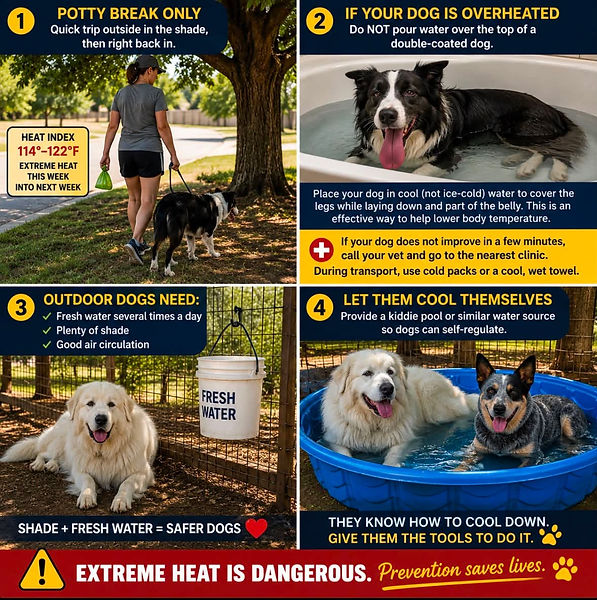
Potty breaks mean potty breaks.
Not:
-
Playing ball
-
Going for walks
-
Running beside a bicycle
-
Training sessions
-
Standing around visiting with neighbors
Outside. Potty. Back inside.
Humidity Matters
Many people only look at the temperature.
Humidity matters.
A 90°F day with high humidity may be more dangerous than a 100°F day with lower humidity because dogs rely heavily on panting to cool themselves.
Humidity reduces the effectiveness of evaporative cooling.
This is why the heat index exists. It tells us what the temperature actually feels like when humidity is factored in.
High heat plus high humidity is where dogs often get into trouble.
Which Dogs Are Most at Risk?
Any dog can develop heat stroke, but some are at greater risk.
These include:
-
Puppies
-
Senior dogs
-
Overweight dogs
-
Dogs with heart disease
-
Dogs with respiratory disease
-
Brachycephalic breeds
-
Dogs recovering from illness
-
Heavy-coated breeds
-
Dogs with limited access to water and shade
Even healthy, athletic dogs can overheat if environmental conditions are severe enough.
Airflow: The Most Overlooked Tool
Most people think about shade and water.
Very few think about airflow.
A fan does not lower the temperature of the air, but it does move stagnant air and improve evaporative cooling from panting.
A shaded area with no airflow can quickly become uncomfortable.
Watch what animals choose when given options.
Many dogs will:
-
Lay in front of a fan
-
Dig cool holes
-
Lay on concrete
-
Move into a loafing shed
-
Stand in water
-
Rotate between shade and airflow throughout the day
Animals are remarkably good at regulating themselves when we provide options.
Think of heat management as layers of protection:
-
Shade
-
Water
-
Airflow
-
Cooling options
-
Limited outdoor exposure
Remove one layer, and the system becomes less effective.
Outdoor Dogs Need Options
Outdoor dogs require more than a water bowl.
They should have access to:
-
Fresh water at all times
-
Multiple water stations
-
Shade throughout the day
-
Good air circulation
-
Kiddie pools or stock tanks
-
Cool dirt or concrete
-
Freedom to move between cooling areas
Many livestock guardian dogs spend their summers moving between shade, water, fans, and cool ground.
Pay attention to your dog.
They're usually telling you what they need.
Double-Coated Dogs Are Supposed to Be Double-Coated
Every summer, owners ask:
"Should I shave my dog because they're hot?"
In most cases, the answer is no.
Double-coated breeds, including German Shepherds, Border Collies, Australian Shepherds, Great Pyrenees, Golden Retrievers, and many others, have two layers of coat:
-
Guard hairs
-
Undercoat
That insulation works both ways.
A healthy double coat helps:
-
Reduce direct sun exposure
-
Protect the skin
-
Slow heat transfer
-
Assist with temperature regulation
Shaving may increase:
-
Sunburn risk
-
UV exposure
-
Coat damage
-
Uneven regrowth
-
Permanent coat changes
These coats were developed intentionally over generations.
Instead of removing the coat, improve the environment.
Provide:
-
Better airflow
-
Fresh water
-
Shade
-
Kiddie pools
-
Cooler surfaces
-
Limited activity
Grooming Matters
This does not mean grooming isn't important.
An impacted undercoat doesn't function properly.
Heavy matting and packed undercoat can:
-
Restrict airflow
-
Hold dirt and debris
-
Reduce cooling efficiency
-
Make dogs less comfortable
Regular grooming helps maintain the coat's natural ability to do its job.
Surface Temperatures
The air temperature is only part of the story.
Surfaces can become significantly hotter than the surrounding air.
Examples include:
-
Asphalt
-
Concrete
-
Artificial turf
-
Truck beds
-
Metal surfaces
If you cannot comfortably hold the back of your hand against the surface for 7–10 seconds, it is too hot for your dog's feet.
Remember, dogs are much closer to the ground than we are.
Signs of Heat Stroke
Early signs include:
-
Excessive panting
-
Bright red gums
-
Thick saliva
-
Restlessness
-
Seeking cool surfaces
-
Weakness
-
Vomiting
Advanced signs include:
-
Collapse
-
Staggering
-
Confusion
-
Pale gums
-
Seizures
-
Loss of consciousness
Do not wait for collapse before taking action.
How to Cool an Overheated Dog
If you suspect your dog is overheating:
Step 1
Move the dog to:
-
Shade
-
Air conditioning
-
A cool indoor environment
Step 2
Place the dog in a bathtub with cool water.
The water should:
-
Cover the legs while lying down
-
Reach part of the belly
-
Be cool—not ice cold
Step 3
Increase airflow.
Use:
-
Fans
-
Air conditioning
-
Moving air
Step 4
Contact your veterinarian.
If your dog is not improving within a few minutes, proceed to the nearest veterinary clinic or emergency hospital.
During transport, consider:
-
Cool packs wrapped in towels
-
Cool, wet towels
-
Wet car chamois
-
Air conditioning
These measures are intended to buy time—not replace veterinary care.
A Note About Double-Coated Dogs
Do not pour water over the top of a double-coated dog's back as your primary cooling method.
Dense undercoats can trap moisture and reduce airflow through the coat.
Instead, focus on:
-
Belly
-
Groin
-
Feet
-
Lower legs
Cooling from underneath is often more effective than simply soaking the top of the coat.
Crushed Ice and Hydration
Some dogs become so tired or overheated that they show little interest in drinking.
Many, however, will gladly:
-
Lick crushed ice
-
Chew on small pieces of ice
-
Drink ice water
Ice can be added to:
-
Water bowls
-
Water buckets
-
Travel dishes
Offer it. Don't force it.
Traveling With Dogs During the Summer Months—and All Year Long
Traveling with dogs during the summer requires planning, but good travel habits should never be seasonal.
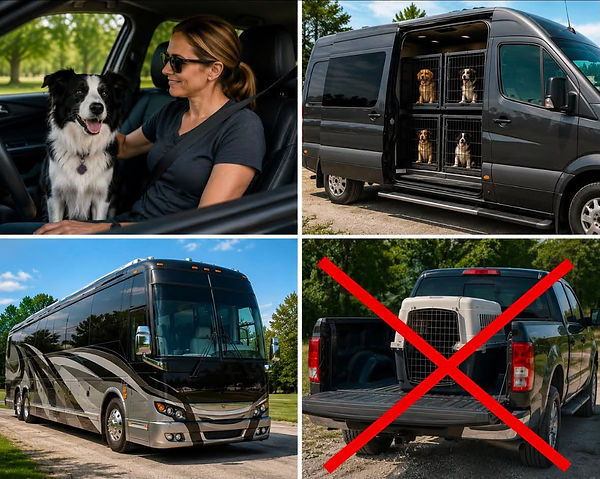
For most pet owners, the answer is simple: don't leave your dog in a vehicle. Cracked windows are not enough, and interior temperatures can rise rapidly.
However, professional transport vehicles are a separate consideration.
Many exhibitors, trainers, and professional transporters utilize:
-
Temperature monitoring systems
-
Engine-off alerts
-
Generator monitoring
-
Shore power alarms
-
Remote cameras
-
Redundant cooling systems
-
Multiple fans
-
Backup power sources
If you travel extensively with dogs, consider investing in systems that immediately notify you if:
-
Interior temperatures rise
-
Shore power is lost
-
A generator fails
-
The vehicle is turned off
-
Cooling systems stop functioning
That said, technology should never replace responsible animal husbandry.
No monitoring system can replace physically opening the door, looking at your dogs, evaluating their condition, and confirming that all systems are functioning as intended.
The best transport setups combine:
-
Proper equipment
-
Redundancy
-
Monitoring
-
Preparation
-
Frequent visual checks
Many experienced owners also travel with:
-
Ice chests
-
Extra water
-
Crushed ice
-
Stainless steel bowls
-
Cooling packs
-
Wet car chamois in Ziploc bags
-
Battery-operated fans
-
Emergency veterinarian information
Good travel habits should not begin during an emergency. They should already be part of your routine.
Technology is an excellent tool, but it should always serve as a supplement to attentive ownership—not a substitute for it.
And remember:
Your destination doesn't matter if your dog never makes it there.
Heat Emergency Kits
Many experienced dog exhibitors, trainers, and livestock owners maintain a heat kit year-round.
Items may include:
-
Ice chest
-
Extra water
-
Crushed ice
-
Cold packs
-
Wet car chamois in Ziploc bags
-
Cooling towels
-
Battery-operated fans
-
Stainless steel bowls
-
Thermometer
-
Emergency veterinary numbers
Preparation is rarely noticeable—until the day you need it.
Horses, Livestock, and Multi-Species Management
The same principles apply across species.
Many horse owners travel with:
-
Five-gallon buckets
-
Bags of ice
-
Extra water
-
Fans
Cool water is often more appealing than warm water during travel.
Whether you're managing one family dog or an entire farm, the fundamentals remain the same:
-
Shade
-
Water
-
Airflow
-
Cooling options
-
Observation
-
Medications and Heat Tolerance
Some medications may affect a dog's ability to tolerate heat.
If your dog is taking medications for:
-
Anxiety
-
Heart disease
-
Allergies
-
Pain management
-
Sedation
Ask your veterinarian whether those medications may influence heat tolerance.
Senior Dogs Need Extra Supervision
Senior dogs are not always the best judges of their own limitations.
Older dogs—particularly those experiencing cognitive decline—may fail to:
-
Seek shade
-
Drink enough water
-
Rest when they should
Monitor senior dogs closely during periods of extreme heat.
Puppies Need Adult Supervision
Puppies are enthusiastic, athletic, and often have no idea when to stop.
Many puppies will continue running and playing long after they should have taken a break.
It's our responsibility to decide when enough is enough.
Swimming Is Not a Guarantee
Water activities are excellent forms of exercise, but they do not make a dog immune to heat stroke.
Dogs can still overheat while:
-
Swimming
-
Dock diving
-
Retrieving
-
Playing at the lake
-
Running through sprinklers
Water is a tool—not a guarantee.
Exercise Timing Matters
During the hottest months of the year:
-
Early mornings are best
-
Evenings after sunset are preferred
-
Midday exercise should be avoided whenever possible
If temperatures are extreme, skipping a day of exercise is often the safest decision.
If your dog needs to burn off energy, bring the activity indoors.
Consider:
-
Fetch down the hallway
-
Tug games
-
Hide-and-seek
-
Food puzzles
-
Basic obedience practice
-
Down stays and impulse-control exercises
Mental exercise is exercise.
Fifteen minutes of training and indoor games can leave many dogs just as satisfied as a walk outside.
Touch Your Dog
Most people look at their dogs.
Fewer people actually put their hands on them.
Get in the habit of checking:
-
Ear temperature
-
Belly temperature
-
Gum moisture
-
Panting rate
-
Overall attitude and energy level
You know your dog better than anyone else.
If something feels "off," pay attention.
Acclimation Matters
Dogs acclimate to their environment over time.
A dog accustomed to northern temperatures may struggle during its first southern summer.
Likewise, the first major heat wave of the year often catches both people and animals off guard.
Pay close attention whenever temperatures rise suddenly.
Common Sense Still Matters
If you're uncomfortable outside, your dog probably is too.
Never force a dog to remain outdoors during extreme heat simply because it "needs exercise."
Missing one walk has never killed a dog.
Heat stroke has.
Final Thoughts
And above all, take care of yourself.
Extreme heat affects everyone—people, dogs, horses, livestock, and wildlife.
Stay hydrated. Take breaks. Seek shade.
Pay attention to how you're feeling.
Because if you're overheated, exhausted, or dehydrated, you're less likely to recognize when your dog is, too.
Your dog depends on you to make good decisions.
Make sure you're taking care of yourself so you can continue taking care of them.
Good heat management is not one thing. It's twenty small things done consistently.
-
Shade
-
Water
-
Airflow
-
Preparation
-
Observation
Dogs are remarkably good at telling us what they need.
The question is whether we're paying attention.
And remember:
Missing one walk has never killed a dog.
Heat stroke has.